
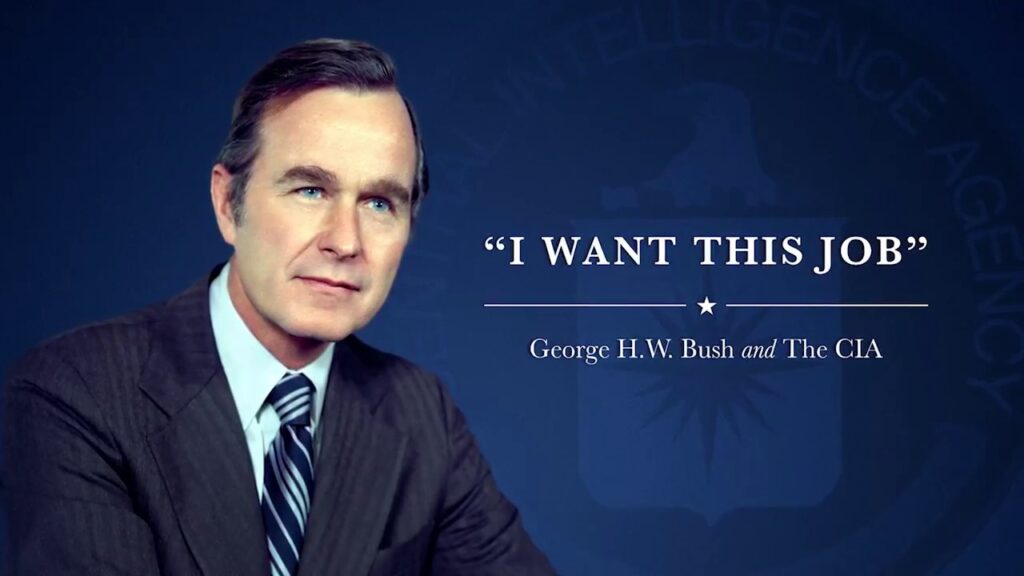
When people think of George H. W. Bush, they often picture the 41st President of the United States, a steady-handed leader known for guiding the nation through the end of the Cold War. But before he ever occupied the Oval Office, Bush held one of the most sensitive and influential roles in American government: Director of Central Intelligence. His year at the helm of the CIA—from January 1976 to January 1977—left a profound mark not only on the Agency, but also on the man who would one day lead the nation.
Restoring Trust During Turbulent Times
Bush took charge during one of the most challenging periods in the CIA’s history. The mid-1970s brought intense scrutiny as the Church and Pike Committee investigations exposed abuses, unauthorized surveillance, and controversial covert actions. Public trust in the intelligence community had reached a historic low.
Rather than shrink from the challenge, Bush embraced it. He became a bridge between the Agency and the American people, guiding the CIA through reform while fiercely defending its essential role in national security. His approach was marked by transparency where possible, accountability where necessary, and unwavering support for the intelligence officers—past and present—whose work he believed was critical to American safety.
Bush’s leadership helped restore morale among CIA employees and signaled to Congress and the public that the Agency was capable of change without compromising its mission.
A Director Who Believed in the People Behind the Secrets
One of Bush’s greatest legacies at the Agency was his genuine respect for the intelligence profession. He visited CIA offices, shook hands with analysts and operatives, and emphasized that their work—so often unseen and uncredited—was vital to national security. He pushed for stronger oversight, clearer boundaries, and improved professional standards, believing that integrity was as important as information.
This people-first leadership style became a defining trait throughout his later political career.
How CIA Experience Shaped a Future President
Bush’s year at the CIA deeply influenced his worldview. It gave him firsthand insight into global conflict, geopolitical tensions, and the realities of covert operations. When he became President in 1989, he did so with a unique understanding of how intelligence informs diplomacy and military strategy.
This background played a pivotal role in major events of his presidency, including:
- The peaceful end of the Cold War
- The strategic international coalition during the Gulf War
- Managing evolving threats with steady, informed judgment
Bush often credited his time at the CIA for sharpening his ability to navigate crisis and complexity—skills indispensable to a Commander-in-Chief.
A Lasting Legacy at Langley
In 1999, two years after he left the presidency, the CIA headquarters in Langley, Virginia, was renamed the George Bush Center for Intelligence—a rare honor reflecting his enduring impact on the Agency. The tribute acknowledges both his service as director and his lifelong commitment to strengthening America’s intelligence capabilities.
Why His Story Matters
George H. W. Bush’s CIA chapter is a reminder that intelligence history is not just about covert missions and daring operations—it is also about leadership, reform, and the people who guide the intelligence community through its most difficult eras. His tenure illustrates how one individual can restore stability to a shaken institution and how intelligence experience can shape national leadership at the highest level.
For anyone fascinated by the hidden side of American history, Bush’s journey from CIA Director to President offers a rare look at the intersection of espionage, governance, and statesmanship—an essential story for understanding both modern intelligence and modern America.