
“I had reasoned this out in my mind; there was one of two things I had the right to, liberty or death; if I could not have one, I would have the other.”
– Harriet Tubman, 1886
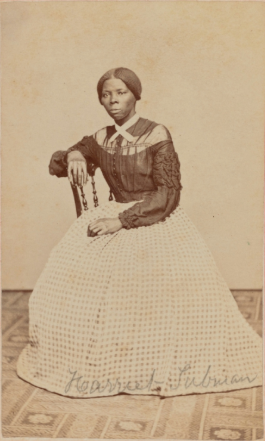 Born Araminta Ross (affectionately called “Minty”) in March of 1822 to parents Harriet (Rit) Green Ross and Benjamin Ross; Harriett was one of nine children. The Ross family were enslaved in Dorchester County, Maryland. Chattel slavery determined that Black people were property to be bought and sold. The children of enslaved women were also considered enslaved, regardless of whether their fathers were enslaved or not. Such was the case for Harriett and her siblings as Benjamin was free, but Rit was not. The Ross’ enslaver, Edward Brodess, did not allow the family to remain together and continued to split them up through the assignment of work. Separated from Benjamin at a young age, Rit, Minty and her siblings worked on a different farm owned by the Brodess family in Bucktown, Maryland.
In 1828 at the age of six, Brodess rented out Minty to provide childcare for nearby overseers. Compensation for her work would go to Brodess and time periods for how long she would be rented out would vary. This work separated her from her mother and siblings for extended periods of time. Minty’s life would change forever when she was 13. In 1835, while she was running errands at a local store, she witnessed another enslaved person’s attempted escape. She refused to assist the enslaver in capturing the fugitive. As the enslaver became desperate in their attempt to recapture the freedom seeker, he threw a two-pound weight. Rather than hitting the intended target, he struck Minty in the back of the head and fractured her skull.
She teetered between life and death. Her mother nursed her back to health as best she could, given their limited resources. After the injury, physical pain became a constant part of her life. She experienced chronic pain from headaches and uncontrollable bouts of seizures, which Minty referred to as “sleeping spells.” Historians now know that she had narcolepsy, which is a “chronic neurological disorder that affects the brain’s ability to control sleep-wake cycles.”
Minty’s place in disability history is often overlooked; it is important to note that narcolepsy was a prominent part of both her identity and her story. Vivid visions of freedom came to her while experiencing these seizures. As a result of her visions, her disability is often associated with her religiosity. However, Minty’s dedication to her faith and her experience with chronic pain hold equal weight. Both elements were key in her determination to seek liberation for the enslaved.
Journey to Freedom
The pain of separation from her family and the cruelty of slavery never left her. Forced back to the fields immediately after her injury, she recounted: “There I worked with the blood and sweat rolling down my face til I couldn’t see.” She became determined to find some sense of autonomy wherever she could, despite the confines of enslavement. She negotiated with her enslaver to select her own work assignments. He agreed so long as she paid him a yearly fee. From then on, she hired herself out on her own terms.
With new tasks came the exploration of new geographic areas. Dorchester County’s environment is marshland; so, the duties given to the enslaved in this area were unique to the landscape of Maryland’s Eastern Shore. She became familiar with the intricacies of the environment through these tasks. Later her familiarity with Dorchester County would be key in her journey to freedom.
In an unexpected turn of events, one assignment required her to work alongside her father in the timber fields. Not only did this allow her to spend time with him after years of separation, but also to work alongside Black sailors. As regular travelers along the East Coast, these men were well connected. They shared their knowledge of the surrounding areas with Minty and assisted her in tapping into a network of those also seeking liberation. It was around this time that she met her future husband, freedman John Tubman. The couple married in 1844 when Harriet was 22 years old. Upon their union, she changed her name from, Araminta “Minty” Ross, to Harriet (likely after her mother) Tubman.
Harriet cherished moments spent with her father and her time as a newlywed. However, Edward Brodess struggled financially and in 1849 found himself deeply in debt, forcing him to sell more of his enslaved workers. Harriet discovered that this situation would likely lead to the sale of herself and her brothers, Ben and Henry. Even Brodess’s death in 1849 did not alleviate Harriett’s fear of the sale, so she sought to make her dreams of freedom a reality. She saw her future clearly, detailing to biographer Sarah Hopkins Bradford what she envisioned as she crossed the Mason-Dixon line that separates Pennsylvania, Maryland, Delaware, and West Virginia: “and on the other side of that line were green fields, and lovely flowers, and beautiful white ladies who stretched out their arms to me over the line.”
Making use of her wealth of knowledge gained over the years, Harriet set her sights on escaping to Philadelphia. The Abolitionist Movement, which was prominent in the city, meant she was sure to find allies and like-minded confidants. After developing a route, the journey with her brothers began. While on the journey, the trio caught word that Eliza Broddess, widow of Edward, placed an ad in the paper calling for their return. Harriet’s brothers decided to return to the plantation for fear of capture and punishment. Not the slightest bit discouraged, the visions that came to Harriet during narcoleptic bouts assured her she would be free. She pressed onward alone, guided to Pennsylvania by the stars.
The Moses of Her People: Conducting the Underground Railroad
With the help of abolitionists along the way, Harriet journeyed from the Brodess’ farm in Maryland to Pennsylvania, where she made connections with abolitionist William Still, a conductor on the Underground Railroad (UGRR). Harriet learned more about the Underground Railroad from Still. Often misunderstood as a railroad with tracks and trains, the Underground Railroad actually refers to various safehouses in which abolitionists provided sanctuary for freedom seekers. “Conductors” led the journeys to freedom, while “Station Masters” hosted freedom seekers within their homes, churches, or other safe spaces. The more Harriet learned, the more her desire to see her family free grew. She decided to return for them in 1850.
After a successful first trip in which she brought both family and friends to freedom, she became a Conductor on the UGRR. She succeeded in her second journey as well and, on her third in 1851, Harriet returned for her husband, John. She quickly discovered that he thought she was dead and
had remarried. John’s new wife was pregnant. Though heartbroken, Harriet’s commitment to freedom knew no bounds. She offered to take the couple to freedom, but John declined.
In 1850, Congressional passage of the Fugitive Slave Act changed the calculus for Conductors like Harriet. The Act “stipulated that it was illegal for any citizen to assist an escaped slave and demanded that if an escaped slave was sighted, he or she should be apprehended and turned in to the authorities for deportation back to the ‘rightful’ owner down south. Any United States Marshall who refused to return a runaway slave would pay a hefty penalty of $1,000.” Many freedom seekers opted to flee to Canada instead of the northern US as a result. Harriet conducted eleven trips from Maryland to St. Catherines, Ontario, Canada between 1850 and 1860. All of these journeys–19 in total– over the years made Harriet a hero, with many African Americans–both free and enslaved–dubbing her “Moses” after the biblical figure who led the Israelites out of slavery in the Exodus from Egypt.
While widely celebrated within her own community, Harriet was infamous among enslavers. Many called for her capture with bounties upwards of $40,000, which would be worth approximately $1.7 million today. Between 1850 and 1860, Harriet brought approximately 70 individuals (including her parents, Rit and Ben) to freedom. She spoke proudly of her accomplishments and famously stated, “I never ran my train off the track and I never lost a passenger.”
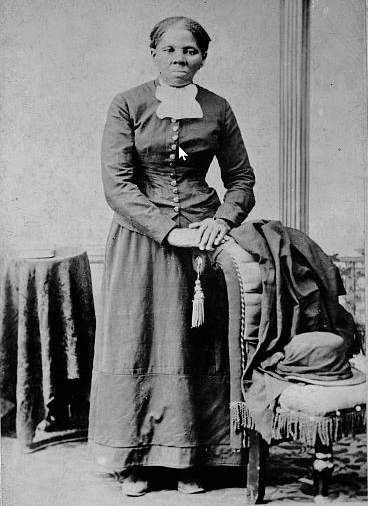 General Tubman: The Union Spy
In 1857, after working to free her parents, Harriet initially brought them to Canada with her but ultimately settled in Auburn, New York. Auburn was a hotbed of abolition and felt like an ideal place for Harriet and her family to settle. Frances Seward, abolitionist wife of Senator (and later Secretary of State under President Abraham Lincoln) William H. Seward, offered Harriet land in Auburn. This further encouraged the family to stay. Though Harriet had her freedom, the fight for the liberation of the enslaved still called to her.
In 1857, she met abolitionist John Brown. Brown was outspoken in his support of antislavery and, though unpopular among white southerners, his efforts were largely supported by those in the North. Harriet and Brown formed a close friendship, with Brown dubbing her “General Tubman.” She once claimed to have seen him in many of her narcoleptic dreams before meeting him. The pair worked together, including on Brown’s plans for the raid on Harpers Ferry, (now West) Virginia; Harriet provided her geographical expertise and recruited formerly enslaved people to assist in the raid. While planned as a way to steal guns and start a revolt to free enslaved people across the South, the raid ultimately ended in failure. An army unit, led by future Confederate General Robert E. Lee, captured Brown and put him on trial for “treason, Murder and inciting a Slave rebellion.” Brown was hung shortly thereafter. Harriet was not in attendance at his hanging due to illness.
In April 1861, the American Civil War broke out over the issue of slavery. Harriet saw an opportunity to get involved, enlisting in the Union Army as a nurse where she cared for wounded soldiers with natural remedies. In 1863, Harriet took on the role of a scout and organized a group of spies. She recruited enslaved people interested in assisting the Union. Harriet helped Colonel James Montgomery coordinate the Combahee River Raid in South Carolina, which aimed to “harass whites and rescue freed slaves.” The raid was wildly successful with Montgomery’s troops burning down many plantations and freeing approximately 750 enslaved people. With their newfound freedom, many of the formerly enslaved men opted to join the Union’s fight against the Confederacy. Harriet is recognized as the first woman in US history to both plan and lead a military raid. In June 2021, the US Army inducted her into the Military Intelligence Corps.
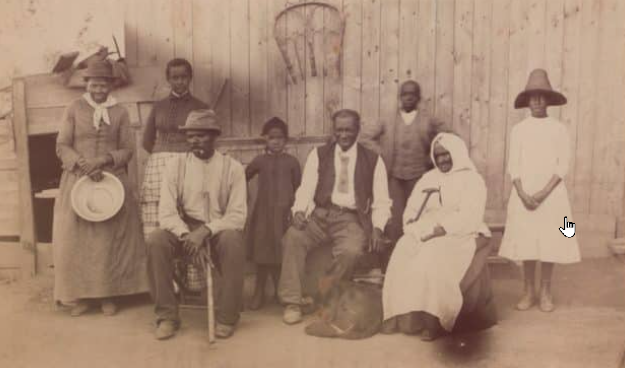 Harriet Tubman (on the far left) is photographed alongside her husband Nelson Davis, adopted child Gertie, and various other family.
Later Life and Legacy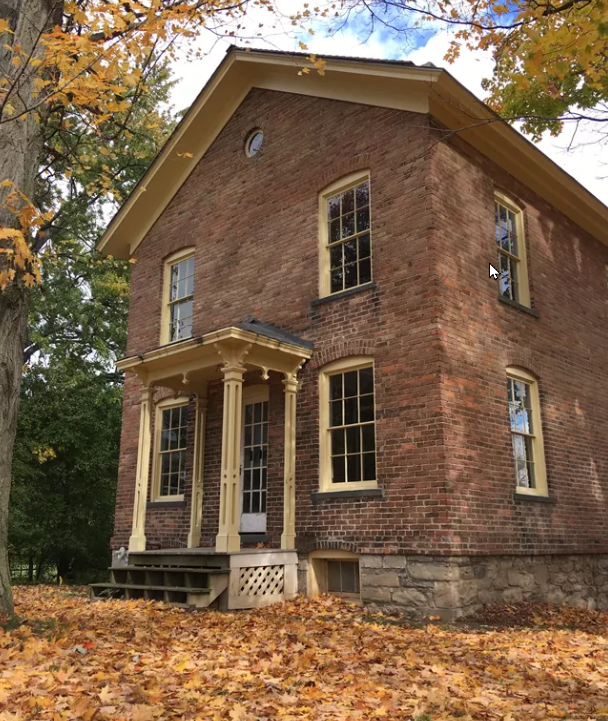 During her time with the Union Army, Harriet met her second husband, Nelson Davis. The couple married in 1869 in Auburn, NY where he, Harriet, and her freed family members (one of which was their adopted daughter, Gertie), would live out their days. Nelson built the family a home, which still stands today.
It is also in Auburn where Harriet founded the Home for the Aged, an institution that provided care for those with “paralysis, epilepsy, vision impairment and blindness.”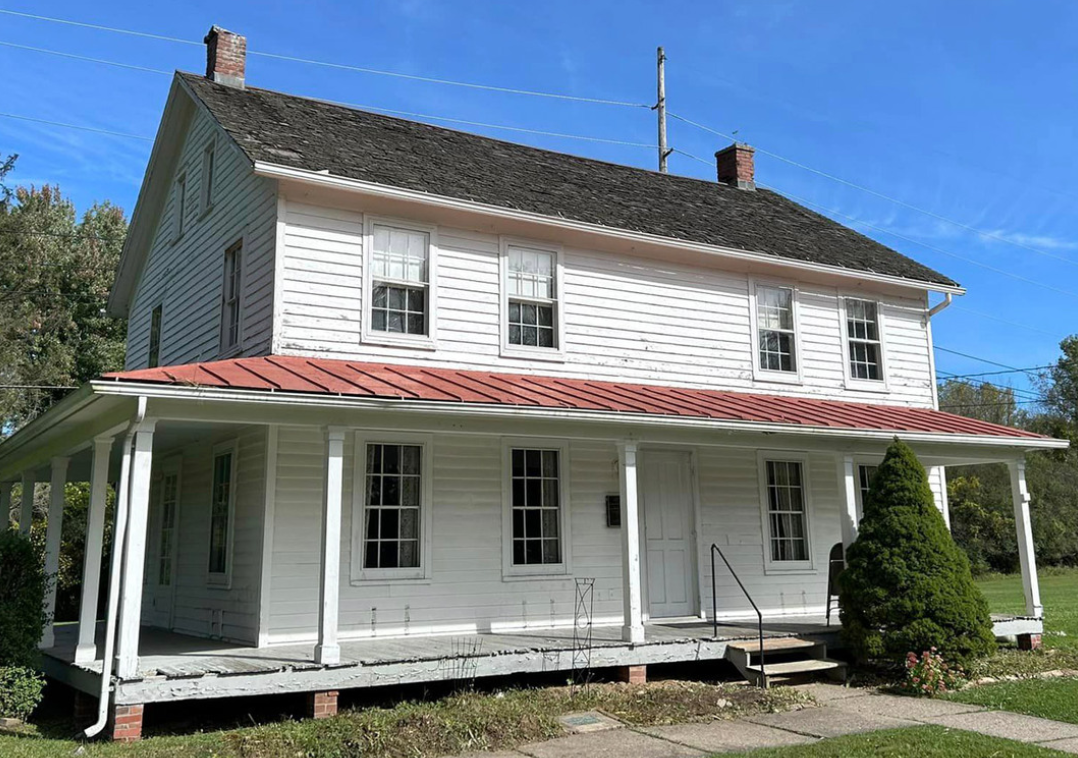 ( Photo Source: National Park Service –https://www.nps.gov/hart/learn/historyculture/tubman-residence.htm )
Harriet’s Home for the Aged in the 1850s and as it stands today.
(Source: National Park Service — https://www.nps.gov/places/tubmanagedhome.htm)
A staunch supporter of the suffrage movement, Harriet worked alongside various upstate-New York based suffragists, including Lucretia Mott, Susan B. Anthony, and Elizabeth Cady Stanton. The interests of abolitionists were aligned closely with those of suffragists, with both movements concerned with autonomy and freedom. Later in life, Harriet attended various women’s rights conferences. She also collaborated with the AME Zion Church, helping them raise money to build their church in Auburn. As collaborative partners, the church then supported Harriet’s dream of making the Home for the Aged a reality.
Nelson Davis passed away in 1888. In his absence, Harriet continued to dedicate her final 25 years to philanthropic efforts. In At the age of 74, Tubman purchased at auction a 25 acre parcel of land with numerous structures which abutted her residential property. Her hope was to establish the Tubman Home for Aged and Indigent Negroes to carry on her work of caring for the old and poor in her community. When she was unable to raise funds necessary to open the facility, Tubman deeded the property to the African Methodist Episcopal Zion Church in exchange for their opening and operating the Tubman Home for Aged and Indigent Negroes. The facility operated from 1908 until the early 1920s. Tubman herself became a patient, staying in a structure on the property called John Brown Hall, which was used as the infirmary and main dormitory, until her death in 1913
In 1913, at the age of 91, Harriet Tubman-Davis died of pneumonia in the Home for the Aged & Indigent Negroes. In her final words, Tubman called upon her faith and made reference to John 14:3 in the Bible. She stated, “I go away to prepare a place for you, that where I am you also may be.” She was laid to rest in the Fort Hill Cemetery in Auburn.
In 1896, at the age of 74, Harriet purchased at auction a 25 acre parcel of land with numerous structures which abutted her residential property. Her hope was to establish The Tubman Home for Aged and Indigent Negroes to carry on the work of caring for the old and poor in her community. When she was unable to raise funds necessary to open the facility, she deeded the property to the African Methodist Episcopal Zion Church in exchange for their opening and operating the Tubman Home for Aged and Indigent Negroes. The facility operated from 1908 until the early 1920s. Harriet herself became a patient, staying in a structure on the property called John Brown Hall, which was used as the infirmary and main dormitory, until her death in 1913.
Of service to her community until the very end, Harriet Tubman’s legacy remains relevant. In 2024, the United States Mint launched the 2024 Harriet Tubman Commemorative Coin Program. On Veteran’s Day that same year, the Governor of Maryland recognized Tubman as “one of the greatest authors of the American story” and posthumously named Tubman a One-Star Brigadier General.
Harriet is remembered for taking control of her own destiny and ultimately forging a path for others. She is celebrated not only for the hundreds of enslaved that she freed over the course of her lifetime, but for all of those who still look to her story for guidance. Just as she looked to the North Star to carry her to freedom, her work and values remain a guiding light to many to continue onward–no matter how harrowing the path ahead.
If you are tired, keep going, if you are scared, keep going, if you are hungry, keep going, if you want to taste freedom, keep going — Harriet Tubman.
Source: MLA – Dawson, Shay. “Harriet Tubman-Davis.” National Women’s History Museum. National Women’s History Museum, 2024.
Chicago – Dawson, Shay. “Harriet Tubman-Davis” National Women’s History Museum. 2024. www.womenshistory.org/education-resources/biographies/harriet-tubman.